
Poll: Bukharian Emigrants' Funds Are Restoring Jewish Cemeteries in Tashkent and Samarkand. Who Should Bear the Main Responsibility for Their Upkeep?
The Tashkent fund reported restoring the Tekstil and Chigatai cemeteries, and the Samarkand fund elected a new president after reporting on its cemetery work. Readers weigh in on who should be mainly responsible for Uzbekistan's Bukharian Jewish cemeteries.

This poll is based on the Bukharian Jewish Post article on the Tashkent Charitable Foundation's cemetery restoration, published Nov. 18, 2026, and on a report about the Samarkand Charitable Fund published by The Bukharian Times on Nov. 19, 2026 (translated from Russian). Links are listed at the end.
When most of the Bukharian Jews of Uzbekistan emigrated in the 1990s, they left behind the graves of generations of their families. Today, much of the upkeep of those cemeteries is paid for by funds that emigrants set up in their new countries, many of them in New York. Two reports this week describe how that work is organized and what it has achieved.
Tashkent
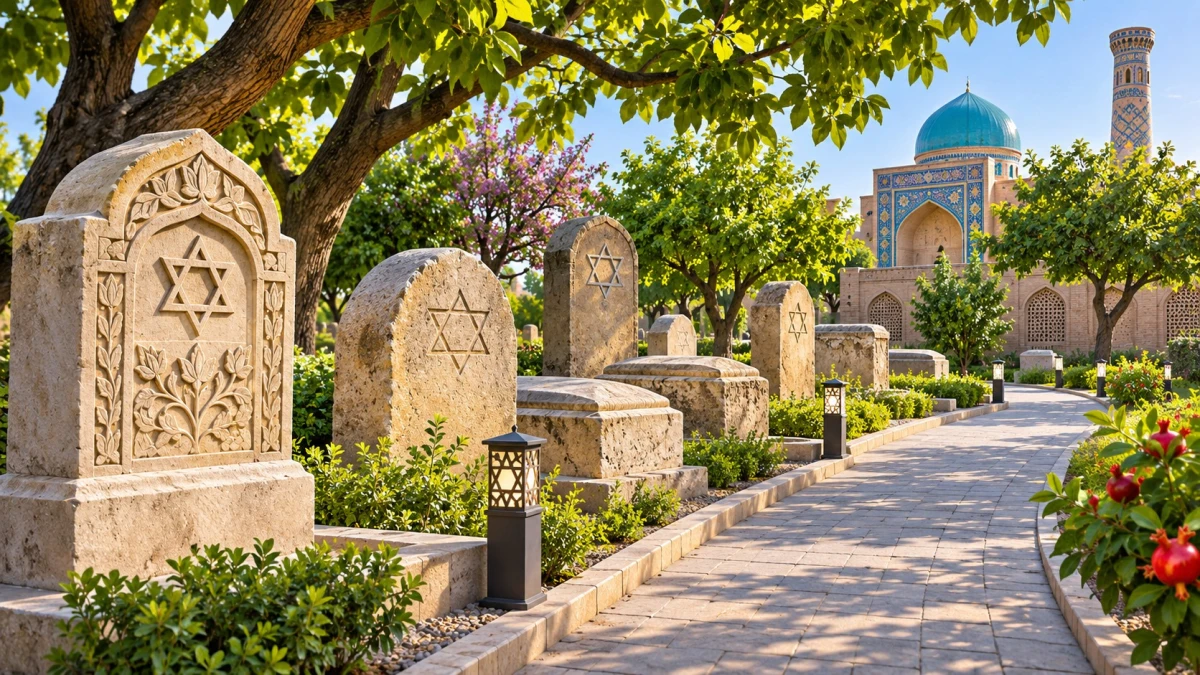
At its annual charity evening on Nov. 12, 2026, the Tashkent Charitable Foundation, named after David Aminov and run by Bukharian Jews from Tashkent who now live abroad, showed a film on its restoration of the city's two Jewish cemeteries, Tekstil and Chigatai, Bukharian Jewish Post reported, based on videos posted by Kaykov TV.
According to the film, the fund began its work more than 15 years ago. At Chigatai, the narration lists 1,500 square meters of paving stones, more than 100 trees, the restoration of more than 100 headstones, a fully reconstructed children's section, a water line around the perimeter and the translation of inscriptions on 400 headstones. At Tekstil, it lists more than 600 square meters of paving, 26 restored headstones and the restoration of the monument to participants in World War II. Surveillance cameras and solar-powered lamps were installed for security, the film says, and QR codes around the perimeter link visitors to the fund's website. The fund's website appeals for support to Tashkent natives "regardless of the state or country" where they live.
Earlier reports in the Bukharian Jewish Link, in 2022, described the Tashkent fund as part of a wider network of regional funds set up by the American Bukharian community to look after dozens of cemeteries in the former Soviet republics, and quoted the fund's president, Alik Babakhanov, as saying that about 7,000 former Tashkent residents live in New York.
At the same evening, Aron Aronov, founder of the Bukharian Jewish Museum in New York, spoke about why emigrants keep returning. "We did not run from the Uzbeks, not from the Tajiks," he said. "We left the communist system." He said that when visitors say the names of their ancestors at a cemetery, "we are saying: dear ones, we have not forgotten you."
Samarkand
On Nov. 14, the Samarkand Charitable Fund, founded in 1998, held its annual reporting and election meeting and elected Marik Moshiyakh Kalontarov as president, The Bukharian Times reported. Outgoing president Roman Khanimov said members had supported the Samarkand Jewish cemetery financially since the fund was founded. "We all left Samarkand, but we left the most sacred thing there: the graves of our ancestors," he said, in the newspaper's account.
According to the report, full-scale reconstruction of the cemetery began on June 1, 2018, under a plan presented in New York by Valery Alaev, the leader of Samarkand's Bukharian Jewish community. Khanimov said the fund's spending has also gone to Israeli soldiers and community organizations in New York. He described the cemetery as "an open-air museum, protected by the state and UNESCO." Speakers at the meeting proposed creating a single system linking the American fund with the Bukharian Jewish organizations still active in Samarkand.
What is not known
Neither report gave the total amounts raised or spent, and neither described what share, if any, of the upkeep is paid for by Uzbek authorities.
The poll
Who should bear the main responsibility for maintaining Bukharian Jewish cemeteries in Uzbekistan?
- Funds set up by emigrants and their descendants abroad
- The government and local authorities of Uzbekistan
- The Jewish communities that still live in Uzbekistan
- All of them together, in a shared arrangement
- Not sure
Read the full article: https://bjpost.news/3026
Sources: Bukharian Jewish Post, "Tashkent Fund Reports Restoration of the Tekstil and Chigatai Jewish Cemeteries at Its Annual Evening, Where Aron Aronov Says 'We Did Not Run From the Uzbeks'," Nov. 18, 2026, https://bjpost.news/3026 ; Kaykov TV, "Charity Fund Tashkent 11.12.2026," Nov. 16, 2026, https://www.youtube.com/watch?v=9uyDbQBDX4Y ; Tashkent Charitable Foundation named after David Aminov, https://fundtashkent.org/ ; The Bukharian Times, "Марик Мошиях Калонтаров избран президентом фонда 'Самарканд'," by Rafael Nektalov, Nov. 19, 2026, https://bukhariantimes.org/marik-moshijah-kalontarov-izbran-prezidentom-fonda-samarkand/
What's Your Reaction?
 Like
0
 Dislike
0
 Love
0
 Funny
0
 Wow
0
 Sad
0
 Angry
0









Comments (0)