
Israel Upgrades David's Sling Air Defense to Counter More Ballistic Missiles and Withstand Weeks of Attacks, Bloomberg Reports
Bloomberg reported on Nov. 20 that Israel extended the interception range of David's Sling so it can handle a wider range of ballistic missiles and weeks of sustained barrages, easing reliance on costlier Arrow interceptors; each Stunner interceptor costs about $1 million, versus more than $4 million for a Patriot PAC-3.

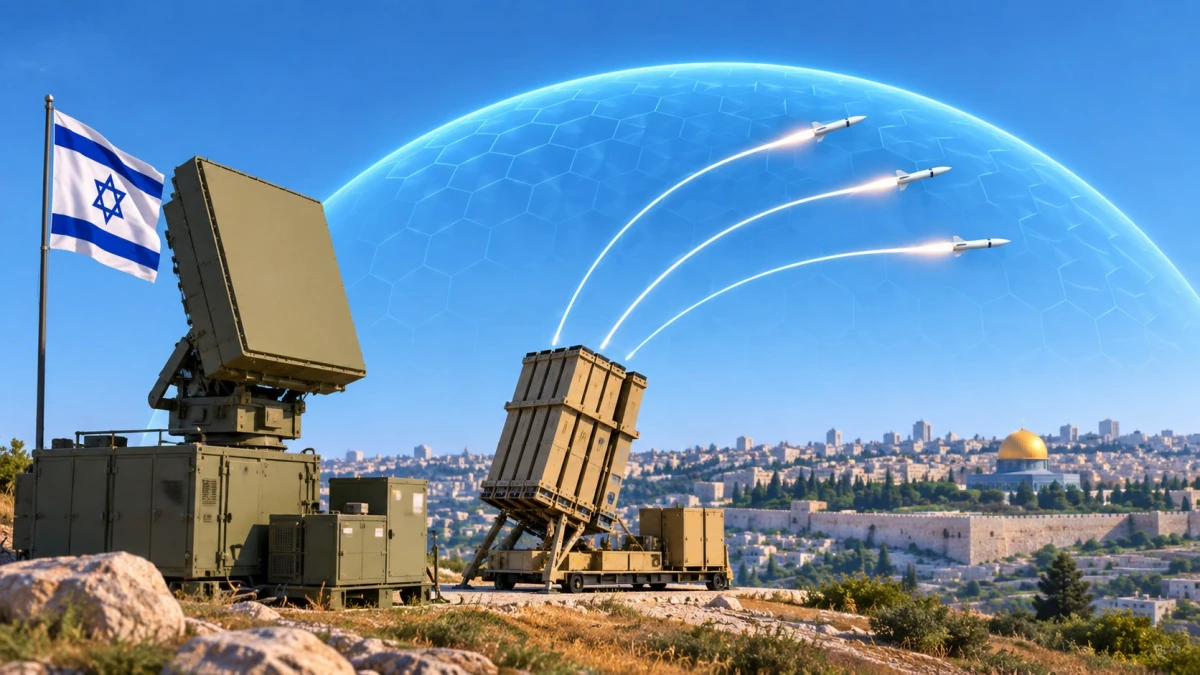
Source: Instagram, @push.il. This report is an English translation of a Hebrew-language post.
Source: @push.il on Instagram
View the original post on Instagram
JERUSALEM — Israel has upgraded its David's Sling air defense system, extending its interception range so that it can counter a wider range of ballistic missile threats and sustain defensive operations through weeks of attacks, Bloomberg reported on Friday, Nov. 20, citing an Israeli Air Force official. The report was carried by The Jerusalem Post, Calcalist's Ctech and Israel National News.
The news site Push reported the upgrade in a Hebrew-language Instagram post, translated here by Bukharian Jewish Post. Push's post, which referred to the interceptor as the "Magic Wand," noted that each one costs about $1 million, compared with more than $4 million for an American Patriot missile, and said the upgrade is aimed at Iran. The details below come from Bloomberg's report as published by those outlets.
What was upgraded
David's Sling forms the middle layer of Israel's multilayered air defense network, between Iron Dome, which mainly intercepts short-range rockets, and the Arrow systems, which target longer-range ballistic missiles, Ctech reported. The system, designed to intercept heavy missiles and drones according to The Jerusalem Post, was developed jointly by Israel's Rafael Advanced Defense Systems and the U.S. defense contractor RTX, Ctech reported.
The head of air defense investigations in the Israel Air Force told Bloomberg that Israel can now counter a wider range of ballistic missile threats and withstand weeks of sustained attacks, The Jerusalem Post reported. The official spoke on condition of anonymity in line with air force policy. The published reports did not state the system's new range in kilometers or describe how the extension was achieved.
Israel hopes the expanded capabilities will allow David's Sling to handle threats that might otherwise require more expensive systems, preserving Arrow interceptors for more advanced ballistic missiles, according to Ctech.
The cost question
David's Sling uses the Stunner interceptor. Each costs about $1 million, according to Bloomberg, compared with more than $4 million for a PAC-3 interceptor used by the U.S. Patriot system, Israel National News and Ctech reported. Bloomberg Intelligence analyst Wayne Sanders estimates that a Stunner costs about one-third as much as an Arrow 3 interceptor, Israel National News reported.
"When we developed the first generations of kinetic technical missile defense, the notion was that you're dealing with a few threats, not with hundreds or thousands," Uzi Rubin, an analyst at the Jerusalem Institute for Strategy and Security who oversaw the development of Israel's first national missile defense shield, told Bloomberg, as cited by The Jerusalem Post. "Now we have to come up with cheap kinetic kill missiles."
Production capacity is another factor. A person familiar with the defense industry told Bloomberg that Rafael and RTX can produce thousands of interceptors a year in Israel, with about 2,500 more produced in the United States for the Iron Dome and David's Sling systems, according to Ctech and Israel National News.
Lessons from the war with Iran
According to Bloomberg, as reported by Ctech, the need for improvements became clear during the war with Iran, when repeated missile barrages exposed weaknesses in Israel's defenses. David's Sling was used against ballistic missiles, including during two Iranian attacks on the southern cities of Arad and Dimona on March 21. In both cases, the interceptors failed to destroy the incoming missiles, which struck populated areas, caused extensive damage and injured dozens of people.
Israeli defenses nonetheless intercepted more than 90% of the Iranian missiles launched toward the country during the first three weeks of the war, Ctech reported. The attacks killed 20 people and injured thousands.
The fighting also gave the military extensive operational data. The Air Force official told Bloomberg that the information allowed engineers and military specialists to introduce improvements to defensive systems, sometimes within days, according to Ctech and Israel National News.
Wider context
The upgrade comes as Israel and its allies face pressure to replenish stocks of advanced interceptors depleted by conflicts in the Middle East and Ukraine, Ctech reported. The United States is struggling to meet demand for Patriot interceptors, and Ukrainian President Volodymyr Zelenskyy has said his country needs about 350 Patriot missiles a month, several times current annual production, according to Bloomberg.
Iran remains a significant threat despite damage from American and Israeli airstrikes. A Western intelligence assessment cited by Bloomberg last week estimated that Tehran likely retains at least 1,700 ballistic missiles and is producing about 50 more each month, Ctech and Israel National News reported.
Israel has also been exporting its missile defense systems. Finland and Greece have ordered David's Sling, and Germany has incorporated Arrow 3 into its defenses, according to Ctech.
Sources:
- @push.il on Instagram (Hebrew): https://www.instagram.com/p/Df9hdXlRo1Y/
- The Jerusalem Post, Amit Avitan, Nov. 20, 2026, citing Bloomberg: https://www.jpost.com/defense-and-tech/article-915574
- Ctech by Calcalist, Nov. 20, 2026, citing Bloomberg: https://www.calcalistech.com/ctechnews/article/hubt1k34i
- Israel National News, Nov. 20, 2026, citing Bloomberg: https://www.israelnationalnews.com/news/436705
What's Your Reaction?
 Like
0
 Dislike
0
 Love
0
 Funny
0
 Wow
0
 Sad
0
 Angry
0











Comments (0)