
Knesset Extends Israel's State of Emergency by Four Months, to March 18, 2027, Instead of the Usual Year
The Knesset voted 8-1 on Nov. 18 to extend Israel's state of emergency, in force since 1948, until March 18, 2027, under Section 38 of Basic Law: The Government; the temporary Foreign Affairs and Defense Committee chaired by Avigdor Liberman can approve only four-month renewals.

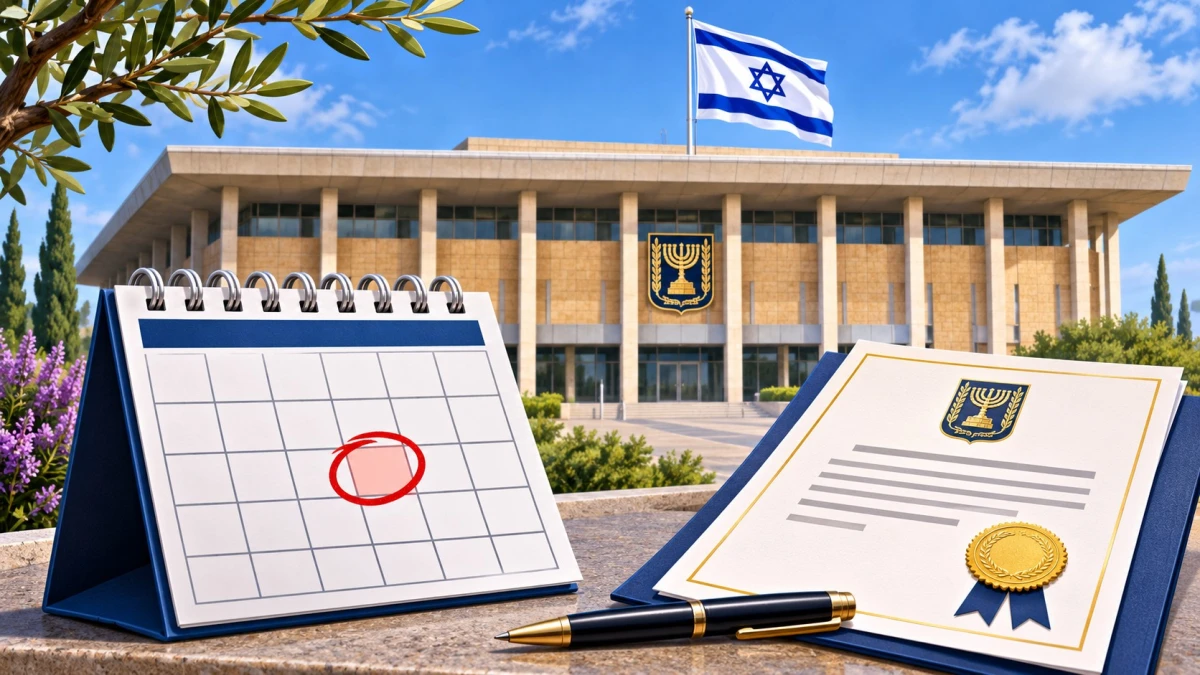
Source: Instagram, @push.il. This report is an English translation of a Hebrew-language post.
Source: @push.il on Instagram
View the original post on Instagram
JERUSALEM — The Knesset has extended Israel's declared state of emergency by four months, until March 18, 2027, rather than the full year that is customary. The plenum approved the extension on Wednesday, Nov. 18, by a vote of 8 to 1, following a government request and a recommendation by the temporary Foreign Affairs and Defense Committee, the Knesset said, as reported by JNS and the Hebrew-language site NewsCenter.
The news site Push reported the extension in a Hebrew-language Instagram post, translated here by Bukharian Jewish Post. The details below come from the Knesset's announcement as reported by JNS, and from reports by Kikar HaShabbat, JFeed and NewsCenter.
Why four months and not a year
The Foreign Affairs and Defense Committee, chaired by MK Avigdor Liberman, approved the government's request on Tuesday, Nov. 17, to extend the declaration under Section 38 of Basic Law: The Government, Kikar HaShabbat and JFeed reported. Under that section, the Knesset may declare a state of emergency for a period of up to one year at a time, and the declaration is normally renewed annually.
This time, the shorter renewal stems from the committee's makeup and temporary status, according to Kikar HaShabbat and JFeed. The temporary committee, formed after the Oct. 27 Knesset election and before a new government has been sworn in, is authorized to approve only a four-month extension, Hebrew media reported, as cited by JNS.
The committee's session was held in two parts, Kikar HaShabbat reported. In the open part, members heard from representatives of government ministries. In a closed-door session, the committee heard from representatives of the Defense Ministry and the Shin Bet security service and held an in-depth discussion of administrative detention.
A declaration in force since 1948
Israel has been under a continuous state of emergency since the Provisional State Council declared one at the founding of the state in 1948, and it has never been revoked, JNS and Kikar HaShabbat reported. The declaration contains no precise definition of an "emergency," has no inherent time limit and is renewed on a regular basis.
According to the reports, the declaration gives the government two main powers. The first is the authority to issue emergency regulations that can override Knesset legislation, subject to legal limits. The second is that the validity of a range of laws, regulations and orders depends on the declaration remaining in force.
How the powers have been used
The committee's legal adviser noted that for most of the past two decades the government rarely used its power to issue emergency regulations, Kikar HaShabbat reported. Between 2005 and 2019, only two sets of emergency regulations were issued, both to ensure essential work services at the Atomic Energy Commission.
That changed sharply in recent years, according to the legal adviser's review as reported by Kikar HaShabbat and JFeed:
- With the outbreak of the coronavirus pandemic in 2020, 38 sets of emergency regulations were issued, and another set followed the discovery of the Omicron variant in November 2021. They covered limits on movement in public spaces, economic aid to citizens, essential services, and special arrangements in the courts and prisons.
- After the outbreak of the Swords of Iron war in October 2023, 11 more sets were issued, including provisions on using information from the biometric database for identification, extending legal deadlines for the detention of unlawful combatants, and arrangements on arrests.
- During Operation Rising Lion in June 2025, two sets were issued, on identifying and locating missing persons and on dealing with cyberattacks.
- During the release of security prisoners under the Gaza ceasefire agreement in October 2025, one set was issued for just two days, allowing hearings by video conference for detainees and prisoners.
- With the start of Operation Roaring Lion in March 2026, another set was issued on identifying and locating missing persons.
Some of these regulations were later replaced by primary legislation passed by the Knesset, some were revoked and others expired on their own, Kikar HaShabbat reported. The extension allows the government to continue issuing emergency regulations as needed until at least March 2027.
What happens next
Under the new extension, the declaration will lapse on March 18, 2027, unless the Knesset renews it again before that date. As long as the current temporary committee remains in place, it can approve renewals of only four months at a time, according to JNS.
Sources:
- @push.il on Instagram (Hebrew): https://www.instagram.com/p/Df5G0POR0-m/
- JNS, Nov. 19, 2026: https://www.jns.org/news/israel-news/knesset-votes-to-extend-longstanding-state-of-emergency
- Kikar HaShabbat (Hebrew), David Hacohen, Nov. 17, 2026: https://www.kikar.co.il/political-news/emergency-state-extension-four-months-knesset
- JFeed, Nov. 17, 2026: https://www.jfeed.com/news-israel/tongnn
- NewsCenter (Hebrew): https://newscenter.co.il/topic/70994
What's Your Reaction?
 Like
0
 Dislike
0
 Love
0
 Funny
0
 Wow
0
 Sad
0
 Angry
0









Comments (0)