
Quiz: One Photographer, 200 Guests and AI Songs in Bukhori. How Closely Did You Follow Emin Kuliev’s Kaykov TV Interview?
Test what you know about New York photographer Emin Kuliev’s Kaykov TV interview on weddings, street photography, AI and songs he generated in Bukhori.

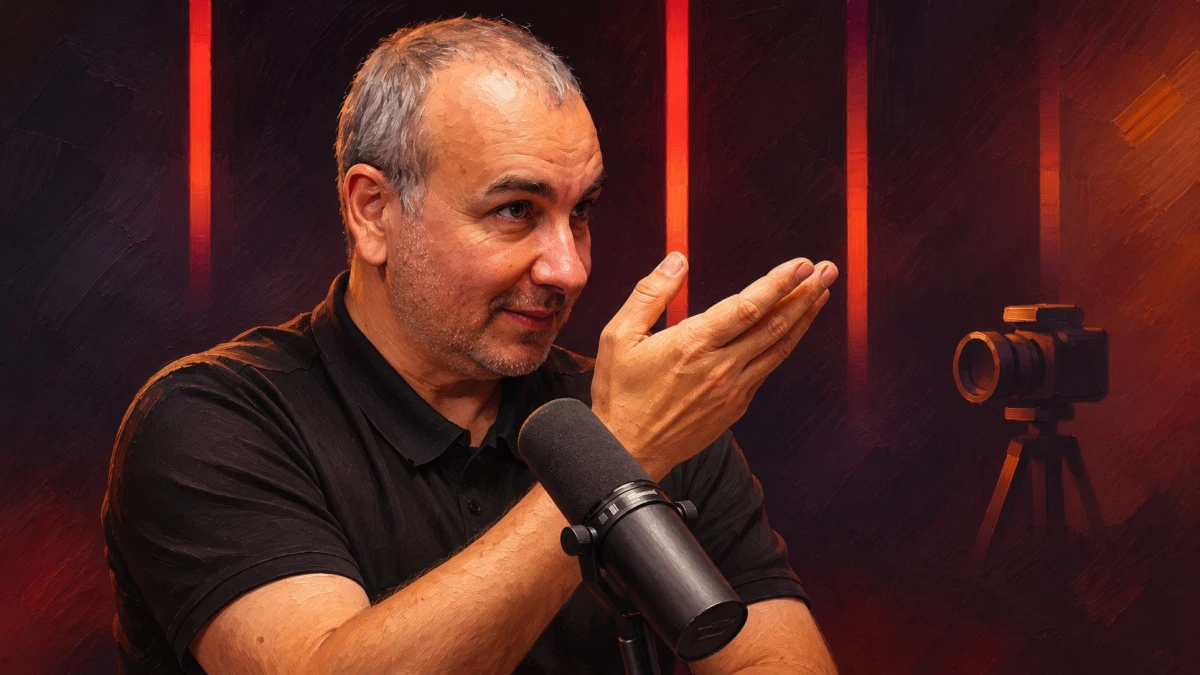
This quiz is based on Bukharian Jewish Post’s translation from Russian of a Kaykov TV interview and the channel’s published descriptions of its clips.
New York wedding and street photographer Emin Kuliev was the guest on a Russian-language episode of Kaykov TV that premiered on the channel’s YouTube page on Monday, Nov. 2. He told host Roman Kaykov that artificial intelligence will transform his profession within a few years, and he played songs in Bukhori, the language of Bukharian Jews, that he had generated with an AI tool. Bukharian Jewish Post reported on the 46-minute interview on Nov. 3. Since then, Kaykov TV has released more short clips from the conversation, including one on Nov. 3 about a famous magazine photograph. Below is a summary of what was reported, followed by a 10-question quiz. The answers are at the end.
From medicine to the camera
Kaykov TV introduced Kuliev as a well-known New York street and wedding photographer with 25 years of experience. The episode description says the conversation covers his childhood in Baku, his move to the United States, his difficult path into photography and a car accident that changed his life. Kuliev said he first chose a medical track in college because it promised a secure job. After clinical rotations in a hospital, he switched his major to art. The turning point, he said, was a serious car accident followed by nearly a year of recovery. Shortly before the accident, in 2002, he had bought a Canon G2 digital camera. While recovering at home, he experimented with backgrounds, flash and light and photographed musicians, actors, dancers and rappers.
Weddings without a second shooter
Kuliev said he never hired a second photographer for a wedding, even at events of 200 guests. He said he shot roughly 12 to 15 weddings a year and found clients through word of mouth, without advertising. In one clip, he recalls a wedding at which his camera broke on the third frame and his backup camera had only 38 percent battery left. After that, he said, he always carried spare batteries. He said guests now photograph everything on their phones. At a dog parade, he said, he could not find a single camera among about a thousand spectators.
“Three to five years”
Kuliev said that when he first saw AI image generators two or three years ago, he concluded he had perhaps three to five years before generated images became indistinguishable from photographs. He said he tests new models every few days and can no longer tell real portraits from generated ones. About three years ago, he said, he began photographing the streets of Manhattan intensively, often shooting “blind” with a 35-millimeter lens. One clip carries his line, “If you can see it, it’s already too late to shoot.”
Songs in Bukhori, and a famous portrait
Kuliev said he does not speak Bukhori. He wrote lyrics in Russian, including lines about a journey from the Bronx to Queens, and had an AI tool render them as Bukhori songs in the style of Shashmaqam. He said he generated about 200 versions and chose the best ones. Bukhori, also called Judeo-Tajik, is a Judeo-Persian language historically spoken by Bukharan Jews. Shashmaqam, Persian for “six maqams,” is a classical Central Asian genre that may have developed in Bukhara. In the Nov. 3 clip, Kuliev recalls Steve McCurry’s “Afghan Girl,” the 1984 portrait of Sharbat Gula that appeared on National Geographic’s June 1985 cover. According to the clip’s description, when she was photographed again years later, the reaction was not the same. She was identified in early 2002, and the magazine featured her again that April.
The quiz
1. In which city did Kuliev grow up? A) Tashkent B) Baku C) Samarkand D) Queens
2. What did he study before switching to art? A) Law B) Engineering C) Medicine D) Music
3. Which camera did he buy in 2002? A) Nikon D1 B) Leica M6 C) Canon G2 D) Sony A7
4. How many second photographers did he say he hired for weddings? A) None B) One C) Two D) It depended on the guest count
5. About how many weddings a year did he say he shot? A) 3 to 5 B) 12 to 15 C) 40 to 50 D) More than 100
6. In the broken-camera story, how much battery did his backup camera have left? A) 5% B) 12% C) 38% D) 75%
7. How many years did he estimate before AI images would be indistinguishable from photos? A) 1 to 2 B) 3 to 5 C) 10 D) 20
8. Which lens does he use for shooting “blind” on the street? A) 35 mm B) 50 mm C) 85 mm D) 200 mm
9. About how many AI versions of his Bukhori songs did he generate? A) 2 B) 20 C) 200 D) 2,000
10. In which year did “Afghan Girl” first appear on the cover of National Geographic? A) 1979 B) 1985 C) 1992 D) 2002
Answers
1-B (Baku); 2-C (medicine); 3-C (Canon G2); 4-A (none); 5-B (12 to 15); 6-C (38%); 7-B (three to five years); 8-A (35 mm); 9-C (about 200); 10-B (June 1985).
Sources: Bukharian Jewish Post: Emin Kuliev on Kaykov TV, Nov. 3, 2026; Kaykov TV: Emin Kuliev full interview, Nov. 2, 2026 (in Russian); Kaykov TV: “One photographer at a wedding with 200 guests”; Kaykov TV: “If you see it, it’s already too late to shoot”; Kaykov TV: broken-camera clip; Kaykov TV: “One photograph became a legend,” Nov. 3, 2026; Wikipedia: Afghan Girl; Wikipedia: Sharbat Gula; Wikipedia: Bukharian language; Wikipedia: Shashmaqam.
What's Your Reaction?
 Like
0
 Dislike
0
 Love
0
 Funny
0
 Wow
0
 Sad
0
 Angry
0











Comments (0)