
Former Students and Family Fill Queens Hall for Conference Marking the Centenary of Samarkand Teacher Yuri Nektalov
A Nov. 1 conference at the Center of Bukharian Jews in Queens marked 100 years since the birth of Samarkand physics teacher Yuri Nektalov, with talks by former students.

This report was translated from Russian by Bukharian Jewish Post from coverage by The Bukharian Times.
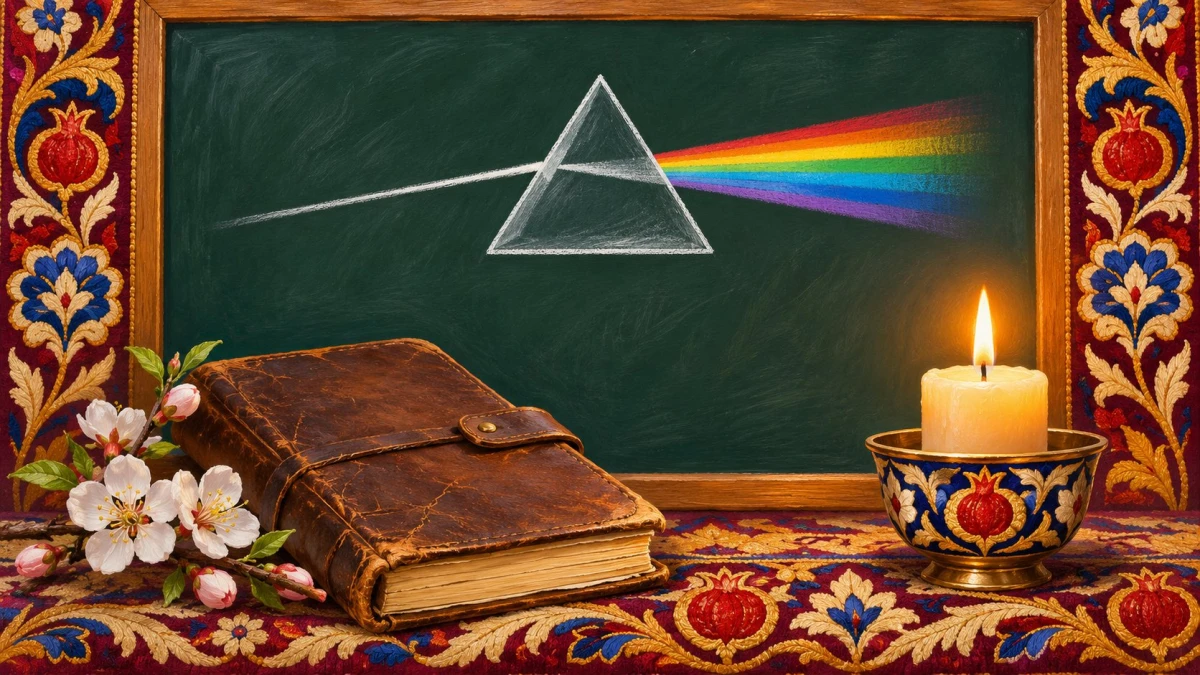
Former students, relatives and readers interested in the history of Samarkand’s Bukharian Jews gathered in Queens on Sunday, Nov. 1, for a conference marking 100 years since the birth of Yuri Zakharovich Nektalov (1926–1983), a physics, chemistry and astronomy teacher who taught in the Jewish quarter of Samarkand. The Bukharian Times reported on the event in its Nov. 5 issue.
The conference, titled “Yuri Zakharovich Nektalov, Legendary Teacher of Samarkand,” was held in the hall of the Center of Bukharian Jews. According to the newspaper, it was organized by the Union of Bukharian Jewish Writers, Poets and Journalists of the USA, the Center of Bukharian Jews of New York, the Samarkand Charitable Foundation, the Itzhak Mavashev Foundation’s institute for the study of Bukharian Jewish heritage in the diaspora and the Museum of Bukharian Jewish Heritage in America, with media support from The Bukharian Times and Kaykov TV.
Three teachers, three centenaries
By 11 a.m. the hall was full, the report said. A portrait of Nektalov stood at the center, flanked by portraits of two of his colleagues at Samarkand’s Schools No. 25 and No. 26, the historians Boris Ilyaevich Babaev and Nisim Rubinovich Mosheev. The newspaper noted that both men’s 100th anniversaries also fall this year. All three taught in the quarter known in Russian as “Vostok,” in Bukhori as “Sharq” and in Hebrew as “Mizrahi.”
The host and organizer, Rafael Nektalov, who chairs the writers’ union and is editor-in-chief of The Bukharian Times, gave a talk titled “The Teacher and the Bukharian Jewish Community of Samarkand.” He used his subject’s career to describe the role of the Soviet schoolteacher in a community that moved from a closed, religious and traditional way of life to deep integration into Soviet science and culture. He also noted that, unlike Yiddish-language schools for European Jews in the USSR, schools for Bukharian Jews taught in their own language, but that its alphabet was changed twice within about 20 years, first to Latin script and then to Cyrillic. In his account, this hurt the intellectual life of the region’s peoples, including Bukharian Jews. The newspaper published the talk in the same issue.
What former students said
Several speakers described the teacher’s influence on their careers:
- David Shimunov said that during his entrance exam at the Samarkand Cooperative Institute, an examiner asked who had taught him physics. When he named Nektalov, the examiner gave him the top grade.
- Moshe Aminov, an economist who graduated in 1955, spoke on “Yuri Zakharovich, My Mentor.” In a separate piece in the same issue, Aminov wrote that Nektalov set up the first physics classroom at School No. 25, and that his class produced eight gold and silver medalists. He added that more than 20 of its 33 graduates went on to higher education.
- Gavriel Pulatov, who holds a candidate of technical sciences degree, said he first transferred back to his old school but returned within a week, realizing that Nektalov could teach him “to really think.”
- Doni Yadgarov began his remarks in Bukhori, the community’s language. He said the teacher “opened the sky” for him: he later trained at a civil aviation school in Riga and worked at Samarkand airport.
- Viktoria Iskhakova, who studied chemistry with Nektalov in 1951, shared photographs from the period, which were passed around the hall.
- Zoya Kimyagarova, director of Samarkand’s School No. 26, said Nektalov also taught astronomy and “opened the night sky of Samarkand” to his students.
Other speakers included Rahmin Nektalov, a 1974 graduate, and Roman Khanimov, president of the Samarkand Charitable Foundation. Khanimov wrote in the same issue that Nektalov taught his class at School No. 26 in 1973–1974. Family members who spoke included the teacher’s daughter, Olga Nektalova, and his niece, Ella Nektalova. Nerie Nektalov connected one of the teacher’s first students, Rahmin Murdakhaevich Nektalov, by telephone. At the close, the teacher’s son, Gavriel Nektalov, thanked the organizers, the speakers and his brother Iosif, who came from Miami for the event.
Violinist Eduard Gulkarov, a native of Bukhara who attended, told the reporter that his grandmother, Adino Aminova, had worked with Nektalov at Samarkand’s School No. 8, outside the Jewish quarter.
In another piece in the same issue, Merik Rubinov recalled the friendship between Nektalov and his father, Samarkand physician Gavriel Rubinov. He wrote that Nektalov named his son Gavriel in his friend’s honor. Bukharian Jewish Post earlier published reminiscences of Nektalov from his son, his niece and former students, which appeared in The Bukharian Times ahead of the conference.
Sources: The Bukharian Times: conference report (Bella Zavulunova); The Bukharian Times: Rafael Nektalov, “The Teacher and the Bukharian Jewish Community in the USSR”; The Bukharian Times: Moshe Aminov, “Hero of Our Time”; The Bukharian Times: Merik Rubinov, “A Friendship Tested by Life”; The Bukharian Times: Roman Khanimov; Bukharian Jewish Post, earlier report.
What's Your Reaction?
 Like
0
 Dislike
0
 Love
0
 Funny
0
 Wow
0
 Sad
0
 Angry
0






Comments (0)