
If Bukharian Walls Could Talk: How Sukkot Was Kept in Central Asian Courtyards
A Bukharian Times heritage feature, written from Queens during Sukkot 5787, recalls courtyard sukkahs, Suzani hangings, reed schach and Silk Road etrogim in Bukhara and Samarkand.

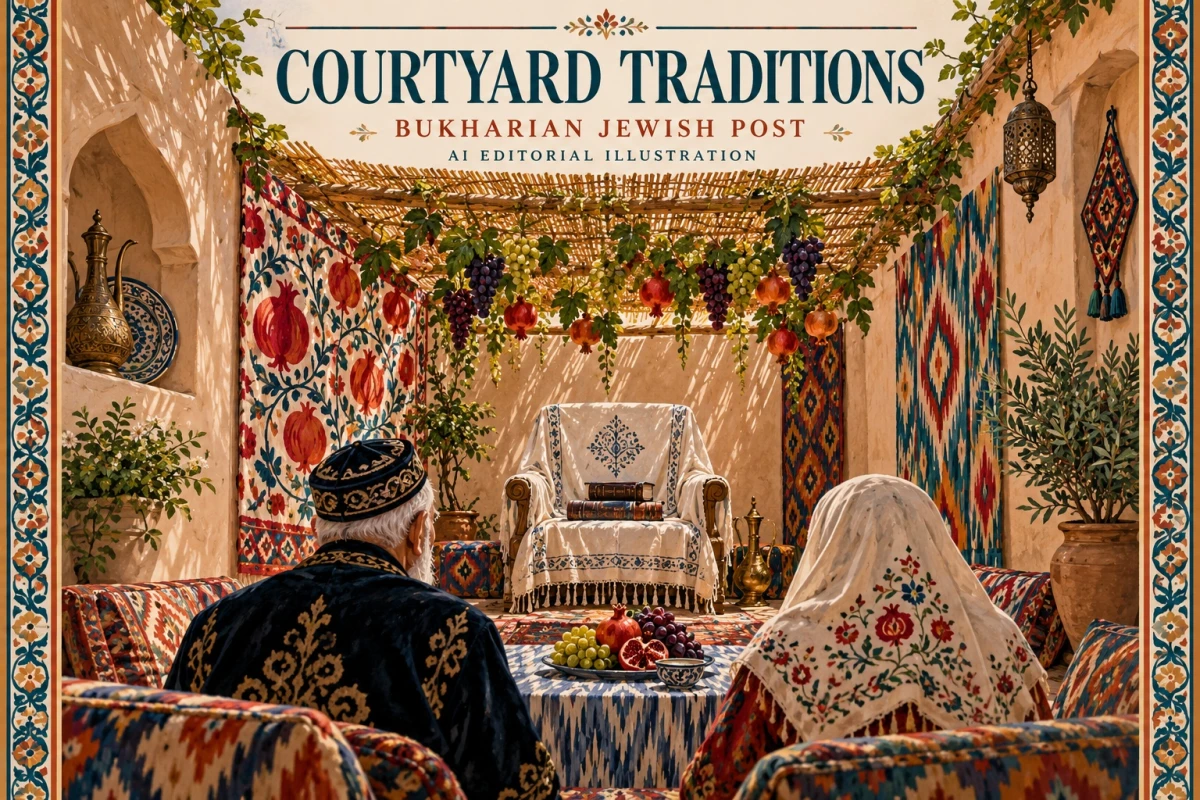
Walking through Jamaica Estates and Fresh Meadows during Sukkot, past sukkahs in neighbors’ yards, the writer of a new Bukharian Times heritage feature saw a simple statement: “we are here, and our traditions endure.” The Oct. 1, 2026 essay uses that Queens scene to look back at how Bukharian Jews kept the festival in Bukhara, Samarkand and Tashkent.
Sukkahs inside the havli
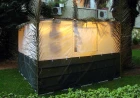
Multi-generational Bukharian families lived around open courtyards known as havli, with mud walls and windows facing inward. Rather than put up a free-standing booth that might draw unwanted attention under political restrictions, families built semi-permanent or collapsible sukkahs inside the courtyard, the feature says.
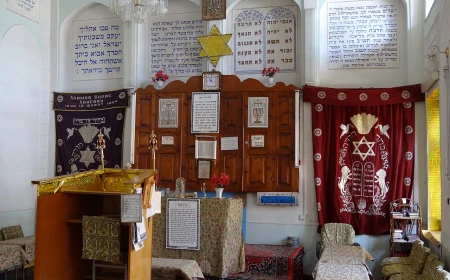
For schach they used woven reed mats called chiy, along with grasses, river reeds, willow branches, grapevines and poplar leaves gathered after the harvest. Inside, the sukkahs were hung with Suzani embroidery and Ikat silk (abrbandi) and laid with hand-woven carpets. Melons, grapes, apples and pomegranates were tied up with silk ribbons as decoration.
Etrogim by the Silk Road
Getting etrogim and lulavim to landlocked Central Asia was hard, but the feature notes that Bukharian merchants’ trade networks reached Iran, Afghanistan, the Ottoman lands, the Land of Israel and the Caucasus, ensuring that valid citrons arrived for the holiday. Meals in the sukkah featured dolma, oshi palov with meat and dried fruit, flatbreads and local melons. A favorite holiday song was “sukkah ve-lulav le-am sgula.”
During the Soviet anti-religious campaign, close-knit households in the mahalla shared hidden sukkahs, the essay says, keeping the ritual alive away from public view. Citing Dr. Robert Pinkhasov’s book The Bukharian Jews: Religion and Traditions, it also describes the Kise Ushpizin, a decorated armchair brought into the sukkah, covered with a veil and holy books, for the spiritual guests.
For Queens families who have just taken down this year’s sukkahs, the feature is a reminder of what those courtyards carried across generations.
Sources: The Bukharian Times.
What's Your Reaction?
 Like
0
 Dislike
0
 Love
0
 Funny
0
 Wow
0
 Sad
0
 Angry
0

Comments (0)