
A Pre-WWI Rosh Hashanah Greeting From the Family Behind Jerusalem’s “Messiah’s Palace”
A rare Hebrew New Year greeting signed by the Yehudayoff family, printed in the Bukharian newspaper Rahamim before World War I, links Central Asian communities to Jerusalem’s Bukharian Quarter.

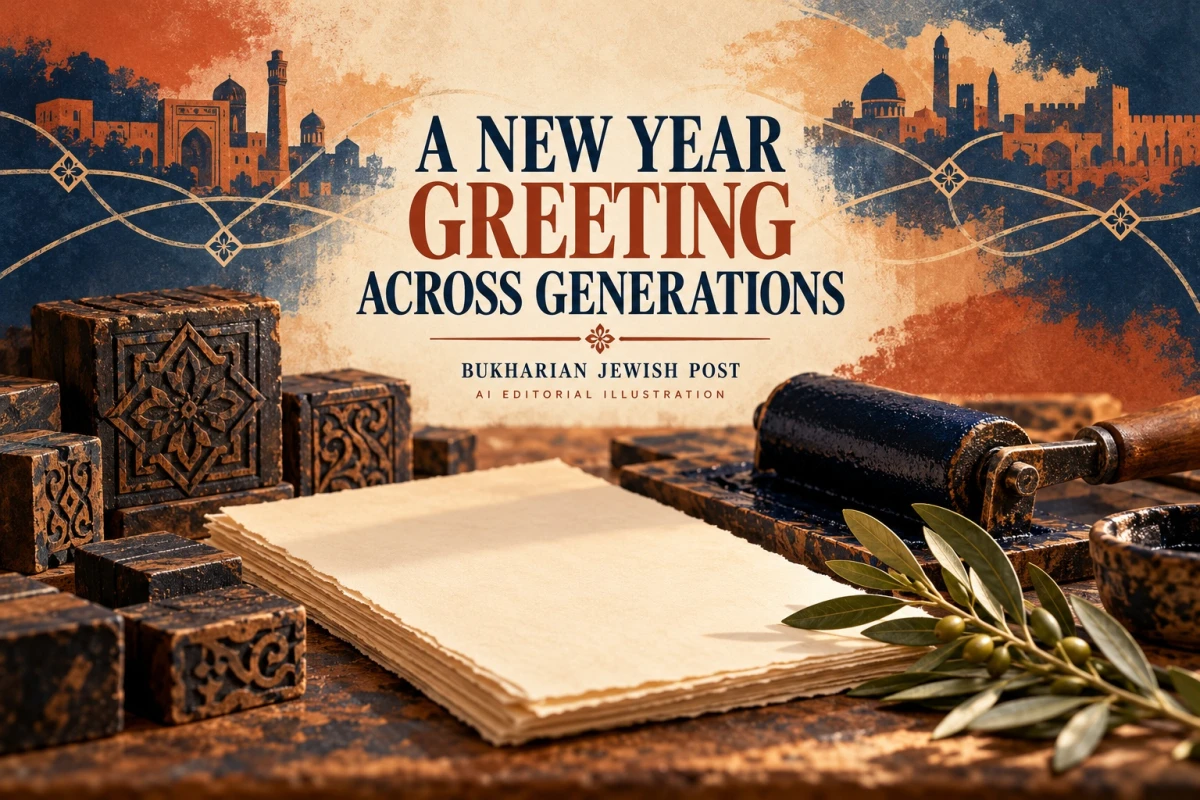
An archival find shared for Rosh Hashanah 5787 sheds light on the ties between Central Asia’s Bukharian Jews and Jerusalem, the Israeli Bukharian news site Bucharim.com reported Sept. 24, 2026.
The item is a New Year’s greeting printed in Rahamim, a historic Bukharian Jewish newspaper published in Kokand in the years before World War I. It reached the site courtesy of Rachel Yehudayoff, writer Giora Fuzailov reported. The greeting is signed by members of the Yehudayoff family of Kokand, led by the well-known magnate Elisha Yehudayoff, along with David, Zion and Mashiach Yehudayoff.
The man behind the “palace”
Elisha Yehudayoff is remembered in Jerusalem as the builder of Beit Yehudayoff, known to this day as “the Palace of the Messiah,” in the Bukharian Quarter, which its founders called Rehovot. The Jewish heritage archive Diarna describes the Yehudayoff-Hefetz Palace on Ezra Street as a three-story, roughly 30-room mansion begun in 1907 with the help of his son-in-law, Yisrael Hefetz. Diarna says its size was linked to the expectation that it would host the Messiah, and that it now houses girls’ schools.
A greeting in Hebrew
What makes the find striking, according to Bucharim.com, is its language. Rahamim was printed in Judeo-Tajik, or Bukhori, but the Yehudayoff greeting was set in Hebrew. It addresses “our relatives and friends near and far” in Tashkent, Samarkand, Kokand, Bukhara and the surrounding towns, wishing them “many years, years of happiness and success, and good holidays and festivals in joy and gladness, amen.”
Fuzailov wrote that the choice of Hebrew suggests the language was not only for prayer and study, but also a living language of communication among the educated and business classes of Central Asian Jewry. The document, he wrote, shows a network that joined faithfulness to tradition, economic success and a deep bond with the Land of Israel and the Hebrew language.
This report was translated from Hebrew by Bukharian Jewish Post from coverage by Bucharim.com.
Sources: Bucharim.com; Diarna.
What's Your Reaction?
 Like
0
 Dislike
0
 Love
0
 Funny
0
 Wow
0
 Sad
0
 Angry
0


Comments (0)